


Plan your reef pc layout
Building a submersible computer is less about assembling parts and more about engineering a sealed environment. The physical constraints of your aquarium dictate the component strategy. You cannot simply drop a standard desktop tower into a tank; the water will short the motherboard within seconds. Instead, you must select components that are either inherently submersible or can be housed within a waterproof enclosure, such as an oil-cooled chassis or a specialized dry-box.
Start by measuring the available space in your reef tank. The PC layout must fit within the designated zone without obstructing water flow or hiding key features of your display. If you are using an oil-cooled case, the volume of dielectric fluid required will displace water, so ensure your tank has sufficient capacity to handle the displacement without overflowing. For smaller builds, consider repurposing an old laptop, which offers a compact form factor that fits neatly into the corner of a display tank.
Once the physical layout is defined, focus on the thermal strategy. In a reef environment, the water temperature is stable, which is ideal for passive cooling if you are using oil immersion. However, if you are using a dry-box, you must ensure that the heat generated by the PC can escape the enclosure and dissipate into the surrounding water. This often means attaching large aluminum heat sinks directly to the outside of the box or using a pump to circulate water over the enclosure's surface. Plan these thermal paths before you buy your components to avoid overheating issues later.
Select waterproof hardware
Building a PC reef requires components that can withstand constant immersion in saltwater or oil without corroding or failing. Standard consumer hardware is not designed for this environment; you need specialized parts built with marine-grade materials or sealed specifically for submersion. Choosing the right hardware is the difference between a stable, long-running reef tank and a catastrophic short circuit.
Submersible CPU and GPU Water Blocks
The most critical components for a reef PC are the water blocks for your CPU and GPU. These must be rated for direct contact with your coolant, whether that is dielectric oil or a specialized non-conductive liquid. Look for blocks made from nickel-plated brass or stainless steel, as these resist corrosion far better than aluminum. The EK Fluid Gaming Digital Reef series, for example, is engineered specifically for this use case, featuring vertical mounting options that fit neatly inside aquarium tanks while maintaining efficient heat transfer.
Marine-Grade Motherboards and Power Supplies
Standard motherboards have exposed copper traces that will oxidize quickly in a humid or splashed environment. For the reef build, select motherboards with conformal coating on the PCB or those explicitly marketed for industrial or marine use. The power supply unit (PSU) is equally important; ensure it has an IP68 rating or is housed in a sealed, waterproof enclosure. If you are using dielectric oil, the PSU can sometimes be submerged directly, but only if it is specifically designed for oil immersion. Otherwise, keep it in a sealed dry box outside the tank.
Waterproof Storage and Connectivity
Hard drives and SSDs must be sealed against moisture ingress. Use SSDs with fully enclosed casings and ensure all SATA and power connectors are sealed with waterproof caps or silicone gaskets. For connectivity, consider using waterproof USB and Ethernet ports with rubber boots. Standard open ports are entry points for salt spray and humidity, which will eventually cause corrosion and connection failure. Prioritize components with minimal exposed connectors to reduce maintenance needs.
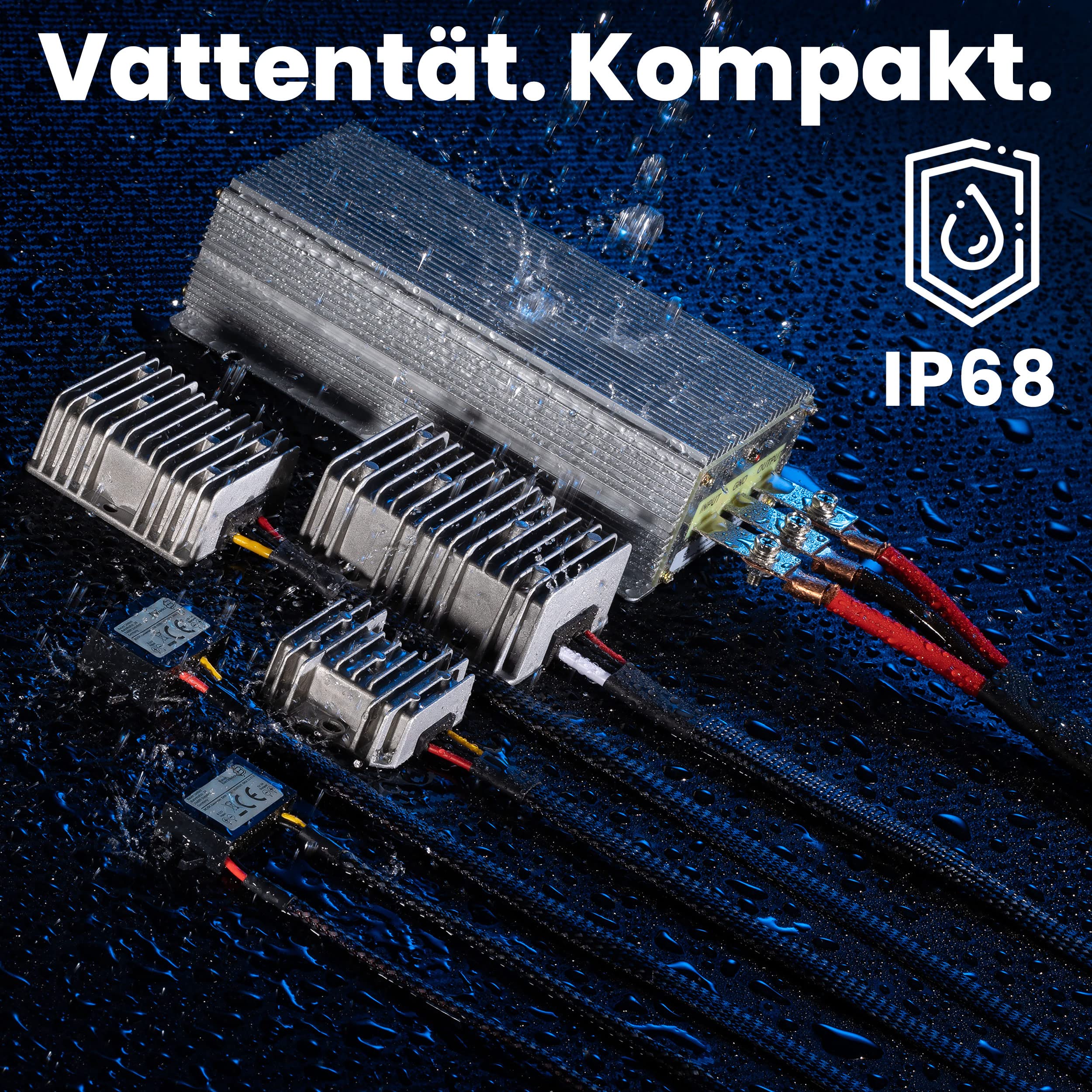

As an Amazon Associate, we may earn from qualifying purchases.
Assemble the Sealed Enclosure
Building a waterproof housing for your PC requires treating the case as a pressure vessel. Unlike standard computer builds, here you are fighting hydrostatic pressure and salt corrosion. The goal is to create a rigid, watertight barrier that isolates the electronics from the marine environment while allowing for thermal management. We will use a two-chamber approach: a dry zone for the components and a wet zone for heat exchange, separated by a sealed interface.
1. Cut the Acrylic Base and Walls
Start with 1/4-inch cast acrylic sheets. Cast acrylic is superior to extruded for this application because it can be chemically welded to form a bond as strong as the material itself. Cut the base plate to the dimensions of your PC case, leaving a 2-inch overhang on all sides to serve as the mounting flange. Cut four wall panels: two side walls, a back panel, and a front panel. The front panel should be slightly shorter than the back to create a slight slope for condensation drainage, though in a fully submerged oil setup, this is less critical. Use a fine-tooth blade to minimize micro-fractures during cutting.
2. Drill Mounting and Feed-Through Holes
Precision is non-negotiable here. Mark the locations for all PC mounting screws (Motherboard I/O, PSU standoffs, and drive bays) on the acrylic base. Drill these holes with a Forstner bit to ensure clean, flat bottoms for the screws. Next, drill holes for external connections. You will need openings for the network cable, USB ports, and potentially a power switch. Use a step drill bit to create clean, chamfered holes that allow rubber grommets to seat flush. Avoid stress concentrations by rounding the corners of any rectangular cutouts for large connectors.
3. Weld the Chamber Walls
Apply acrylic cement (such as Weld-On 4) to the joints between the base and the side walls. Use a clamp or masking tape to hold the panels at a perfect 90-degree angle while the solvent cures. This chemical welding process fuses the plastic, creating a seamless, watertight joint. For the internal partition that separates the dry electronics chamber from the external heat exchange chamber, weld it securely to the base. Ensure there are no gaps or un-welded seams. Allow the acrylic to cure for at least 24 hours before proceeding to ensure maximum bond strength.
4. Install Feed-Through Ports
This is the most critical step for preventing leaks. Install bulkhead connectors for all external cables. Use a rubber grommet or an O-ring seal inside the drilled hole, then secure the bulkhead nut on the outside. For the power supply, you have two options: a sealed external PSU outside the tank with cables running in, or a sealed internal PSU. If using an internal PSU, you must seal the entire unit in a secondary waterproof bag or epoxy potting, which is complex. The safer, more common approach is to keep the PSU outside the tank entirely and route only the low-voltage DC lines or a sealed ATX power supply module into the chamber. For this guide, we assume an external PSU with a sealed ATX power supply unit (PSU) inside, or a specialized sealed PC case. Let’s assume a fully sealed internal PSU for the "true" reef PC experience. You will need to pot the PSU in epoxy or place it in a sealed acrylic sub-chamber. For simplicity and safety, we recommend a sealed external PSU and routing DC power through a sealed DC-DC converter inside the tank, or using a specialized waterproof ATX PSU. Let’s stick to the standard: External PSU, sealed internal components.
Actually, the most robust method is a sealed internal PSU. You must encase the PSU in its own small acrylic box or pot it in epoxy. This adds complexity. A simpler, more reliable method for a first build is to use a sealed external PSU and run a sealed DC-DC converter into the tank, or use a sealed ATX PSU that is itself waterproofed. Let’s go with the sealed ATX PSU method for the most authentic "PC in a tank" look. You will need to seal the PSU vents with mesh and epoxy, and seal the front panel connectors with silicone.
Let’s refine: The standard "Reef PC" build uses a sealed internal PSU. You build a small acrylic box for the PSU, seal it, and place it inside the main chamber. This is complex. A simpler approach is to use a waterproof external PSU and run the power cables through a sealed bulkhead into the tank, where they connect to a sealed DC-DC converter that powers the motherboard. This is safer and easier to maintain. We will proceed with this external PSU + DC-DC converter method.
Install bulkhead connectors for the DC power input. Use high-quality silicone sealant around the bulkhead threads to ensure a watertight seal. Route the DC cables through these ports. Ensure the cables are strain-relieved so that any tugging does not pull on the sealant.
5. Seal and Test the Enclosure
Before installing any electronics, perform a leak test. Fill the chamber with fresh water and let it sit for 24 hours. Check for any weeping at the welds or feed-through ports. If you find a leak, dry the area thoroughly and apply more acrylic cement or silicone sealant. Once the tank is proven watertight, drain and dry it completely. Any moisture left inside will cause corrosion or short circuits. Apply a thin layer of dielectric grease to all connector pins before installation.
6. Install Components and Fill with Dielectric Fluid
Place the motherboard, CPU, GPU, and the sealed DC-DC converter into the chamber. Secure them to the acrylic base using non-corrosive standoffs (brass or stainless steel). Connect all cables. Ensure that no cables are pinched or under tension. Once everything is connected, carefully fill the chamber with a dielectric fluid such as Fluorinert or mineral oil. Fluorinert is non-toxic and evaporates cleanly if spilled, but it is expensive. Mineral oil is cheap but messy and can degrade certain plastics. For a reef tank, mineral oil is commonly used, but ensure it is food-grade and non-toxic. Fill the chamber slowly to avoid trapping air bubbles. Use a vacuum chamber to degas the components before filling, or fill slowly and tap the sides to release bubbles. Leave a small air gap at the top for thermal expansion.
7. Integrate with the Reef Tank
Place the sealed acrylic enclosure into your reef tank. Secure it to the tank bottom or a stand using suction cups or silicone mounts. Connect the external power supply to the DC-DC converter via the bulkhead feed-through. Install your network cable. Turn on the system and monitor the temperature. The dielectric fluid will transfer heat from the components to the acrylic walls, which will then dissipate heat into the tank water. This will slightly raise the water temperature, so you may need to adjust your chiller or heater settings accordingly. Monitor the system for the first few weeks to ensure no leaks or overheating.
Install and test connections
With the motherboard and GPU secured inside the waterproof enclosure, the final hurdle is connecting the external world. This is where most builders make fatal errors. The interface between the dry electronics and the wet aquarium environment is fragile; a single pinched O-ring or a loose connector can turn a functional rig into a paperweight—or worse, a short circuit.
We will proceed methodically. Do not rush the submersion. The goal is to verify that every cable passes through the gland plate without compromising the seal, and that the system boots correctly before it ever sees water.
1. Route cables through the gland plate
Thread your USB, power, and display cables through the pre-drilled holes in your gland plate or bulkhead connector. Before tightening any nuts, apply a thin layer of silicone grease to the O-rings. This reduces friction during insertion and ensures the rubber compresses evenly against the metal, creating a watertight barrier.
2. Secure the gland nuts
Hand-tighten the nuts first, then use a wrench for a final quarter-turn. Over-tightening can crack the plastic bulkhead or deform the O-ring, creating a leak path. If you are using a custom acrylic gland plate, double-check that the cable diameter matches the hole size exactly. If there is a gap, the seal will fail under pressure.
3. Connect peripherals externally
Attach your monitor, keyboard, and mouse to the other side of the gland plate. Ensure the power supply is connected to a GFCI (Ground Fault Circuit Interrupter) outlet. This is non-negotiable for any electrical equipment near water. It will cut power instantly if it detects a ground fault, protecting both your hardware and your life.
4. Perform a dry boot test
Before introducing water, power on the system. Verify that the fans spin, the RGB lights activate, and the display outputs a signal. Check the BIOS to ensure the CPU and GPU temperatures are stable at idle. If the system fails to post, troubleshoot now while it is dry and accessible. Fixing a loose RAM stick is easy; fixing it after submersion is nearly impossible.
5. Conduct a leak test
Seal the main enclosure lid with its gasket. Fill the tank with water up to the normal operating level. Let it sit for 24 hours. Check the exterior of the enclosure for any dampness or condensation on the outside of the acrylic. If the tank is clear and dry, your seals are holding.
-
Verify all O-rings are lubricated with silicone grease
-
Ensure gland nuts are snug but not over-tightened
-
Connect PSU to a GFCI-protected outlet
-
Complete a successful dry boot test
-
Monitor system for 24 hours with no external moisture
Once the leak test passes, you are ready to introduce the marine life. The PC is no longer just a computer; it is a permanent, waterproof fixture in your reef ecosystem.
Maintain your reef pc system
A PC reef is a living ecosystem, not a static aquarium. The salt spray, humidity, and mineral deposits will slowly degrade components if left unchecked. Your maintenance routine should focus on preventing corrosion at the source and ensuring the integrity of your waterproof seals.
Start with the external connections. Saltwater is highly corrosive. Rinse external connectors with fresh water after every maintenance cycle. This simple step prevents salt crystals from forming on USB, power, and data cables, which can lead to short circuits or data corruption over time.
Inspect your acrylic or glass seals quarterly. Look for tiny hairline cracks or discoloration around the O-rings and silicone gaskets. Even a minor leak can introduce freshwater or saltwater into the case, depending on your setup. Replace any compromised seals immediately to maintain the watertight barrier.
Finally, monitor your internal environment. If you use a dry-heat system, ensure the fans are free of dust. If you use a chiller, check the water quality inside the reservoir. Cloudy water indicates algae growth or mineral buildup, which reduces cooling efficiency and can damage internal components. Keep the water clear and the seals tight, and your reef PC will thrive alongside your coral.
Common Aquarium PC Mistakes
Building a PC inside an aquarium is less like assembling a computer and more like engineering a submarine. The margin for error is thin, and the consequences of failure are immediate and expensive. Water doesn't just break electronics; it accelerates corrosion in ways standard humidity never does. Avoiding these fatal errors separates a functional, safe build from a short-circuited disaster.
Skipping the Leak Test
Never install components into a tank that hasn't been pressure-tested. Fill the sealed chamber with fresh water and let it sit for 24 to 48 hours. Check for weeping seals or micro-cracks in the plexiglass. If it leaks then, it will leak with saltwater and live fish. Dry it completely before introducing any hardware.
Ignoring Condensation
Even with a perfect seal, temperature fluctuations cause condensation inside the chamber. This moisture can bridge connections on the motherboard or GPU. Use silica gel packets or a small, waterproofed desiccant unit inside the sealed area to absorb ambient humidity. Ensure your room's ambient temperature doesn't swing wildly, which drives condensation cycles.
Using Non-Marine Grade Sealants
Standard silicone or caulk degrades quickly in saltwater environments. It turns brittle, cracks, and loses its adhesive bond, leading to sudden leaks. Always use 100% silicone sealant labeled as marine-grade or aquarium-safe. These formulations resist salt corrosion and remain flexible over time, maintaining a watertight barrier for years.
Overlooking Electrical Isolation
The power supply and cables are the most vulnerable points. Never run high-voltage AC lines near the water chamber without proper grommets and strain relief. Use waterproof connectors for all DC connections inside the tank. Grounding is critical; ensure your PC is properly grounded to prevent stray voltage from entering the water, which can harm fish and shock you.
Frequently asked: what to check next
Is it safe to run a PC inside a fish tank?
Running a PC in an aquarium is safe only if you use a fully sealed, oil-filled case. Submerging standard electronics in water causes immediate short circuits. However, immersing components in mineral oil prevents oxidation and allows for silent, passive cooling. As long as the power supply and connectors remain above the water line, the system can run indefinitely without corroding.
Can I use a standard PC case for this build?
No. Standard cases are not waterproof and will fail quickly in a marine environment. You need a custom acrylic or glass enclosure that is glued to be completely watertight. This enclosure holds the mineral oil, not the tank water. The tank itself remains separate, containing only the fish and coral.
What type of oil should I use for submersion?
You must use 100% pure mineral oil. Do not use vegetable oil, motor oil, or silicone oil, as these can degrade plastics or harm aquatic life if leaked. Mineral oil is chemically inert, clear, and non-toxic to fish. It also prevents the tank water from evaporating into the PC components, which is a common issue with standard humid setups.
How do I keep the power supply safe?
The power supply unit (PSU) must never be submerged. It should be mounted outside the oil tank, connected via cables that pass through sealed rubber grommets. Any connection point where electricity meets the submerged environment is a failure point. Use waterproof connectors or ensure the cable entry points are sealed with epoxy to prevent oil leakage or water ingress.
Can I add fish to the tank while the PC is running?
Yes, many builders add fish to the tank once the system is stable. The mineral oil acts as a barrier, so fish never touch the electronics. However, ensure the oil tank is fully sealed before adding livestock. Some builders prefer to let the system run for a week to check for leaks before introducing sensitive coral or fish.
No comments yet. Be the first to share your thoughts!